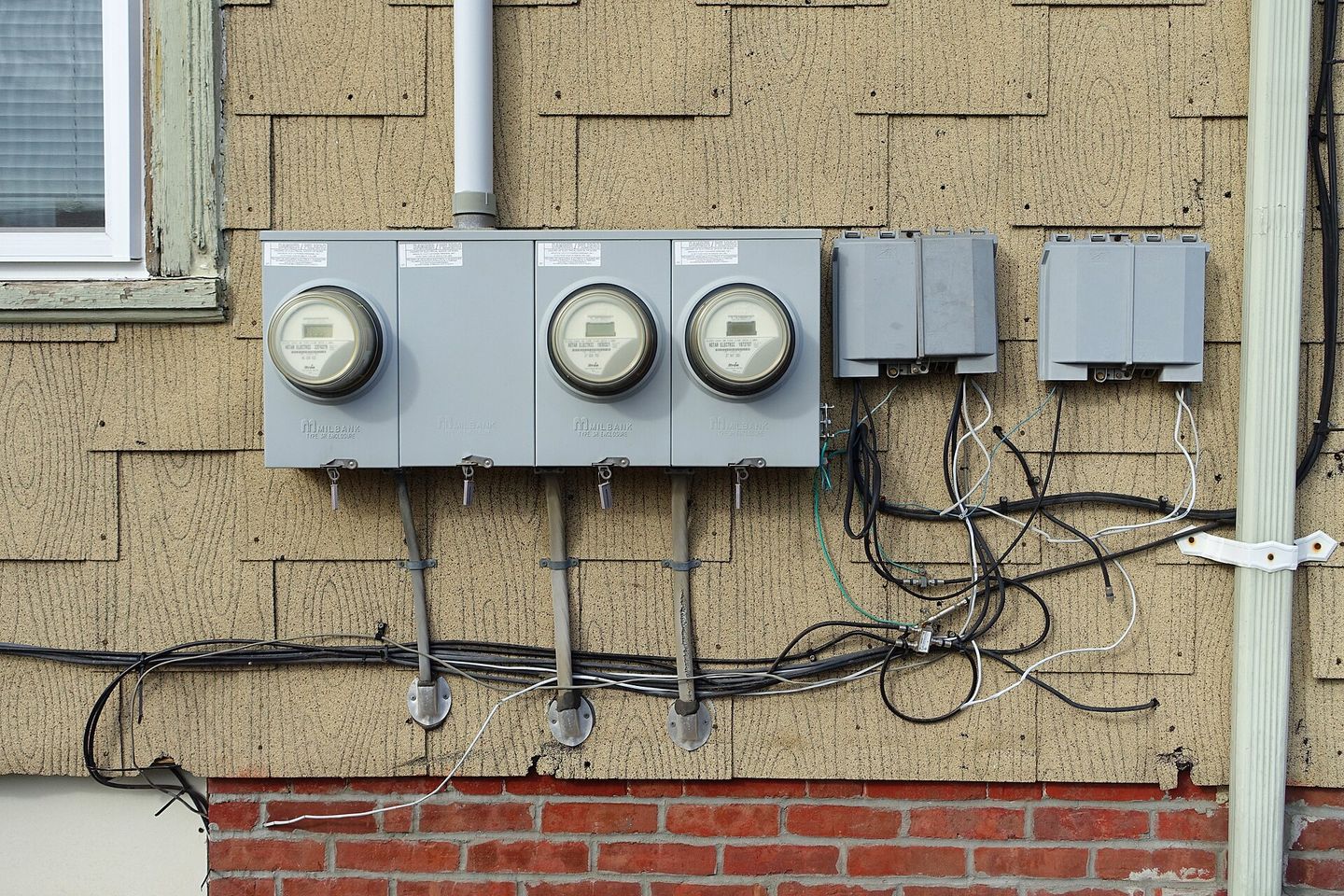
Ofgem announced on 26 August that its price cap will rise by 4% on 1 October, from £1,663 to £1,723 a year for a household using a typical amount of gas and electricity. That is £60 more, or £5 a month, across roughly 22 million homes on default tariffs. Stated as an average it sounds survivable, and for most of the country it is. But an average is the wrong instrument for a cost that takes a larger share of a smaller income, and the cap is quoted in no other way.
The regulator attributes the increase to international gas prices, unsettled since the American war on Iran opened on 28 February. The Centre for Economics and Business Research puts the cumulative cost to British households at £1,100 of real income this year and £1,300 next — £70.4bn in all by the end of 2027. Its senior economist, Liam Daly, put it plainly: “A conflict fought thousands of miles away continues to bear on UK households, with real income erosion felt in the weekly shop, at the pump and on the energy bill.”
The rise is the same £60 in every house. The income it comes out of is not.
What a government does next is a choice, and the choices already made are instructive. VAT comes off electricity bills from 1 October, and the cap rise more than cancels it out. The warm home discount was set at £140 in 2011 and has gone up by £10 since. Environmental levies are collected through bills rather than through taxation, and research indicates that some low-income households spend three times more of their net income on those levies than wealthier households do.
In Tulsa this month, Raelynn McMurchy opened an electricity bill for $1,373, including a $598 deposit charged after earlier late payments. “Our electric bill is literally more than our rent this month,” she said. Her utility disconnects customers at more than five times the national average rate, according to the Energy Department’s first tally of shutoffs, and Oklahoma permits disconnection whenever the heat index sits below 101 degrees. A distribution is not an abstraction. It is a queue outside a church hall.
The serious objection is that a state cannot cushion a shock it neither caused nor can end, and that subsidising bills props up demand for the very fuel whose price is the problem. That is right about universal discounts, which is exactly why the answer should not be one. A social tariff aimed at the households that cannot substitute — cannot insulate, cannot switch, cannot wait for spring — costs less and does more, and it never pretends the gas is cheap.
France shows what a floor does and does not do. Insee reported on 9 July that the poverty rate held at 15.4% in 2024, its highest since 1996, with 9.8 million people below €1,337 a month. Yet living standards rose across the whole distribution that year, and fastest at the bottom: the first decile gained 1.7% against 1.4% for the ninth. The Gini index still rose, to 0.302. Indexation protects the floor; it does not stop the ceiling rising.
None of this requires a theory of history. Household energy debt in Britain reached a record £6bn at the end of June and is forecast to reach £7bn by December — a measurable quantity produced by a measurable gap between what bills cost and what incomes are. Gaps of that kind have been closed before, with unglamorous instruments: a discount worth what it was worth in 2011, levies moved into general taxation, a crisis fund a council can actually draw on.