The cap rises to £1,723 on 1 October and the explanation is ready before the question: a war thousands of miles away, an international gas market, nothing anyone here could have done. Every clause of that is true and the conclusion still does not follow. The war was chosen in Washington. The route by which its cost reaches a British hallway was chosen in Westminster, line by line, over fifteen years, by people who now describe themselves as bystanders.
Milton Friedman had the habit of naming the responsible address: “inflation in the United States is made in Washington and nowhere else.” As a complete theory of 2026 that is too narrow — a closed strait is not a printing press, and pretending otherwise is its own evasion. As a rule about where to look first when a bill arrives, it has aged considerably better than the people who enjoy mocking it, and it explains why voters keep blaming governments that insist they are spectators.
Nobody is consoled for a £1,723 bill by being told that the war which caused it was necessary.
The domestic ledger is long and none of it is foreign. In Britain: employers’ national insurance raised from 13.8% to 15%, duties up on tobacco and alcohol, remote gaming duty doubled to 40%, a temporary cut in fuel duty reversed, winter fuel payments restricted. In America: a war opened on 28 February whose author defends it by saying higher pump prices must be endured. Each measure was argued separately and on its own merits. Together they are the bill, and the bill arrives all at once.
Here is the concession the right usually refuses to make. Renewables are not what is driving British electricity bills; the pricing model and the cost of gas are. Green levies are a small share of the total, and the schemes they fund — the warm home discount among them — would otherwise be paid out of general taxation. Scrapping them moves a cost rather than removing it. Anyone promising cheap power by abolishing net zero is running the same conjuring trick from the other direction.
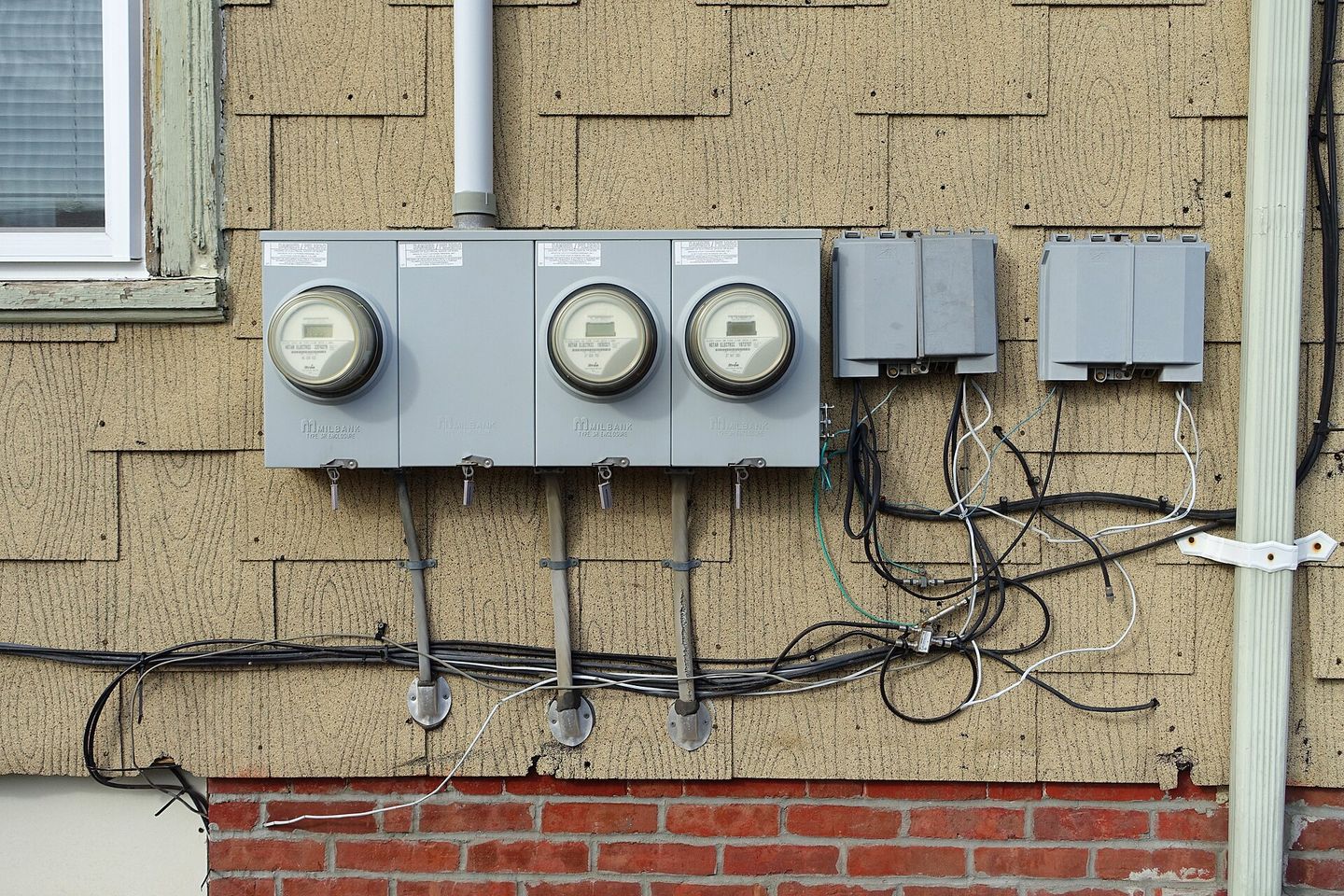
The real objection survives that concession intact, because it was never about the size of the levy. It is about the method of collection. A charge routed through a meter is levied on consumption, and consumption of heat and light does not scale with income; a pensioner in a cold flat and a barrister in a warm one are taxed at the same rate per unit. A charge routed through taxation is levied on income. Choosing the meter was a decision about who pays.
The official statistics then flatter the choice. The Office for National Statistics records the Gini coefficient for disposable income at 32.9% in the financial year ending 2024, lower than before the pandemic and lower than a decade ago. Read further down: mean income fell 4.0% for the poorest fifth and 2.1% for the richest. Measured equality improved because the country grew poorer in the right order. That is the number the governing class watches, and it came back green.
None of this requires a conspiracy — only a class of decision-makers for whom energy is a line item rather than a season. They fix their tariff, they insulate their houses, and they are sincerely puzzled that the country is furious about £60. The fury is not innumerate. It is the correct response to being told that a cost you did not choose, collected by a method you did not choose, is nobody’s fault and nobody’s to answer for.