Xi Jinping arrived in Bishkek on Sunday for a state visit and for the twenty-sixth summit of the Shanghai Cooperation Organisation, which opens tomorrow with twenty-one heads of state expected and the bloc marking its twenty-fifth year. A state visit to Washington is being prepared for September. In an ordinary year this is diary management. In the seventh month of a war that has kept the Strait of Hormuz effectively closed, it is a map of where the world now goes to be heard.
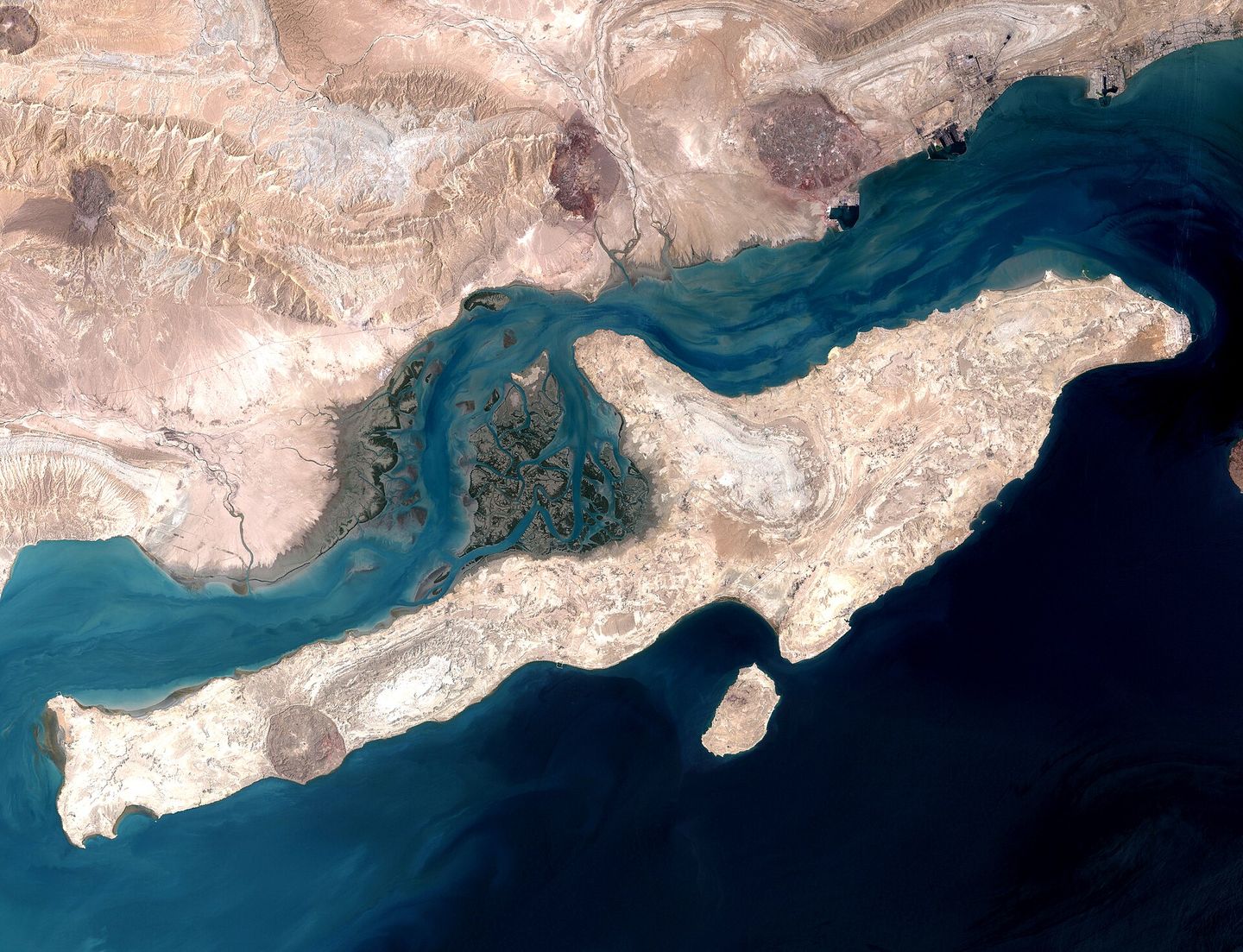
Almost none of it was won. It was vacated. The United States is fighting a war it opened on 28 February and cannot end, through a strait carrying about a fifth of the world's traded oil that it cannot reopen. Allies who used to ask Washington what the plan was have started asking whether there is one. Robert Kagan, who is nobody's declinist, put the American half of it plainly on a Brookings podcast in July: “We blew it. We had a very reasonably stable world order, which everybody decided was the worst thing that had ever happened.”
What Beijing did with the opening is the part the alarm gets wrong. It filled nothing. It brokered no settlement, escorted no tankers, moved no fleet; it vetoed a resolution on escorting ships through the strait, evacuated its nationals and went on buying discounted crude. Kagan's second line is the one worth keeping, and it is not a comfort so much as a measurement.
China can't run the world unless it can at least run its own region.
The constraint on Beijing is domestic and it is arithmetic. The economy grew 4.7 per cent in the first half of 2026 and 4.3 per cent in the second quarter, the weakest since late 2022. Fixed-asset investment fell 5.7 per cent, property investment fell 18.0 per cent, and retail sales rose 1.3 per cent while exports rose 13.4 per cent. That is a country selling its way around a demand problem it has not solved.
The tariff answer to that has already been run as an experiment. A Peterson Institute brief published this month by Mary Lovely and Christine Wan finds China's share of American imports down seven percentage points between 2017 and 2024 while the Chinese value added inside those imports fell two. Taiwan picked up 4.1 points, Vietnam 3.7, Mexico 2.3. The chain was re-routed, at cost, and not rebuilt. None of which is an argument for opening the door and hoping; it is an argument for knowing what a tariff can and cannot be asked to do.
The obvious reply is that this is complacency wearing the clothes of analysis, and it deserves a straight answer. Rare-earth licensing, water cannon aimed at Philippine resupply boats, a military budget rising while the officer corps is purged: none of that is benign and none of it is invented. The claim is not that China is harmless. It is that treating every Chinese gain as an American defeat has produced a decade of policy that left Washington poorer and no safer.
What works is unglamorous and it is available. Keep the alliances close enough that Manila and Tokyo are not left improvising. Write export controls narrow enough to enforce and broad enough to matter. Reopen the strait alongside the countries that use it, including the one that buys most of the oil. And stop conceding, every time a Chinese aircraft flies, that the century belongs to whoever is least distracted.