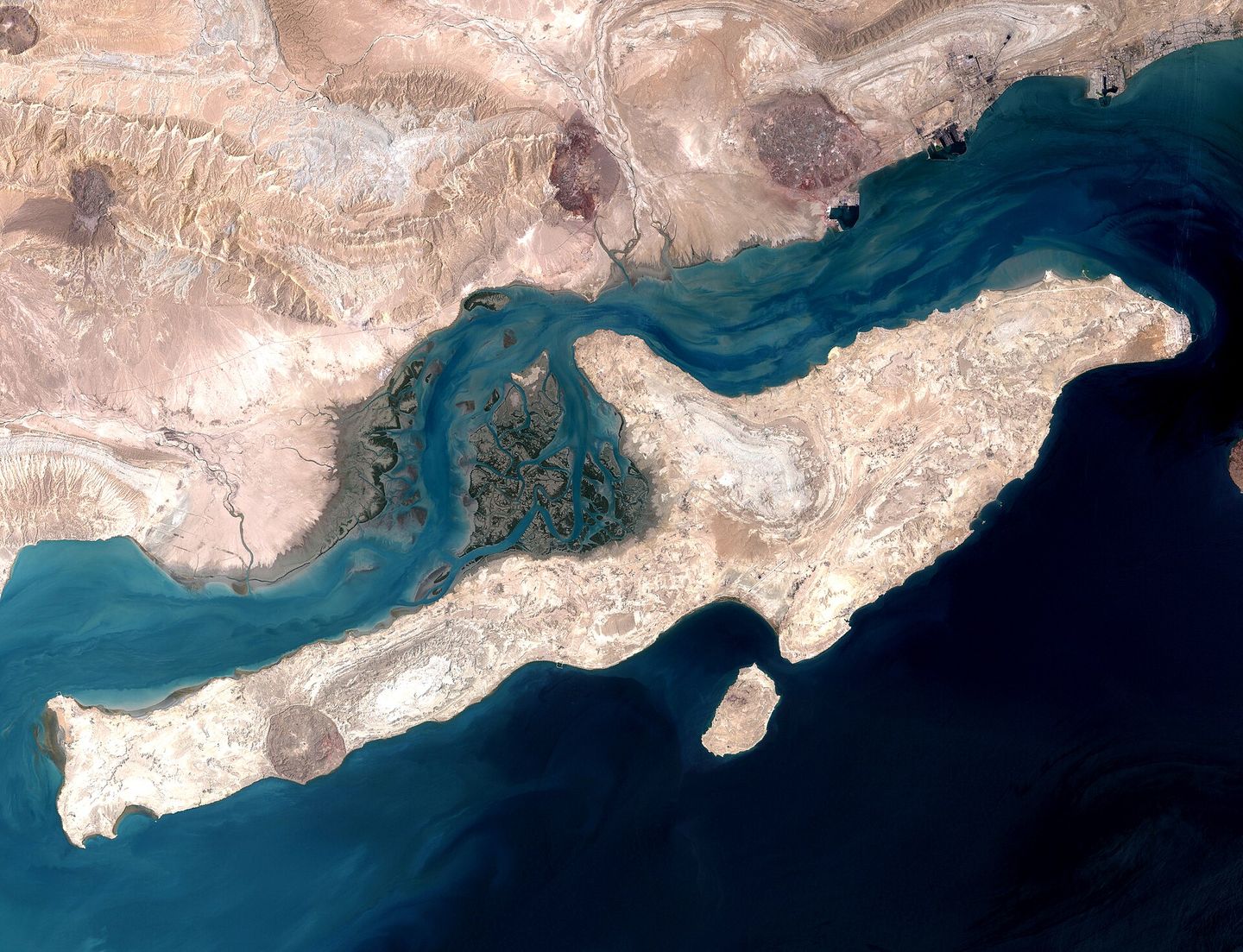
By March, 41 per cent of the battle-ready ships in the United States Navy were concentrated in the Middle East, and between a fifth and a third of the Patriot batteries covering Korea had been pulled back to Osan. That is the pivot to Asia, six months into a war nobody in the country asked for, running in reverse at speed. The interceptors are finite. The hulls are more finite than the interceptors.
And the theory of the case does not survive contact with the trade data. Beijing buys perhaps 80 per cent of Iran's crude, but Iranian barrels are only about 13 per cent of what China imports, and actual Chinese investment in Iran since 2007 runs to roughly five billion dollars against a headline partnership advertised at four hundred. Tehran is a discount supplier, not an ally. Strangling it does not touch Beijing; it merely raises what everyone else pays for fuel.
What Beijing is, is patient, and in May it said so out loud. Trump flew to the Great Hall of the People with a delegation of cabinet officers and chief executives, months after approving eleven billion dollars of arms for Taiwan, more than the whole of the previous administration, and after the drills Beijing ran in reply. Xi Jinping warned that mishandling Taiwan could produce clashes and conflicts, and then made an offer that half of Washington was too busy to hear.
Achieving the great rejuvenation of the Chinese nation and making America great again can go hand in hand.
That is not friendship. It is a great power proposing spheres, and it deserves an answer rather than a sermon, because the alternative on offer is a permanent confrontation over an island that sits off China's coast and half a world from California, conducted by people who have not managed to reopen a single waterway in six months. Trump's own reason for putting the trip off in the first place was that “we've got a war going on”. Precisely.
The deeper problem is that the West cannot bargain with what it no longer makes. Britain is the case study: car production at its lowest since the 1950s, imports from China up six per cent in a year, a chancellor returning from Beijing with six hundred million pounds of investment and calling it leverage, and a British firm putting eight hundred million into a plastics plant in Zhejiang. That is not trade policy. That is a country renting its own supply chain.
The fair objection is that this reads as fatalism, and that somebody has to deter the coastguard cutters. True, and the answer is not rhetorical: build the magnets, the yards and the munitions at home, on a schedule, and let the allies who live in the neighbourhood carry the weight in it. Deterrence bought from a supplier who can revoke the licence at the counter is not deterrence. It is a subscription, and the vendor sets the renewal terms.
The truce on tariffs runs out in November, a summit is being prepared for September, and the American position is weaker in every column than it was in February. That is what the Gulf cost. Come home, rebuild the industrial base that makes any of this credible, and then negotiate with Beijing about the only thing either side actually cares about, which is Taiwan and always was.