Seen from Beijing, this year's events are not a display of strength so much as an accounting entry. A head of state seized in January. A war opened in February. An ally's territory demanded through the spring. Tariffs used as an instrument of pressure against friends. Each of these buys something immediate, and each is paid for out of a single account: the willingness of other states to treat American preferences as legitimate rather than merely as facts.
Chinese analysts have a name for the method. Zuo Xiying of Renmin University of China has argued that “The US government's chaotic and predatory foreign policy will serve to deconstruct the old global structure and undermine the existing international order, while spawning new international crises.” The claim is not that American material power has shrunk. It is that its form has changed, from setting rules that others follow of their own accord to taking what can be taken while the taking is still possible.
A power that must seize what it once simply received is not ascending. It is converting capital into income.
The figures for this are not Chinese figures. Pew surveyed 36 countries between February and May and found a median of 23 per cent expressing confidence in the American president, and 37 per cent holding a favourable view of the United States against 57 per cent unfavourable. In Canada, the share describing the United States as a reliable partner fell from 83 per cent in 2022 to 35. That is the price of one year of coercion, and Washington is paying it.
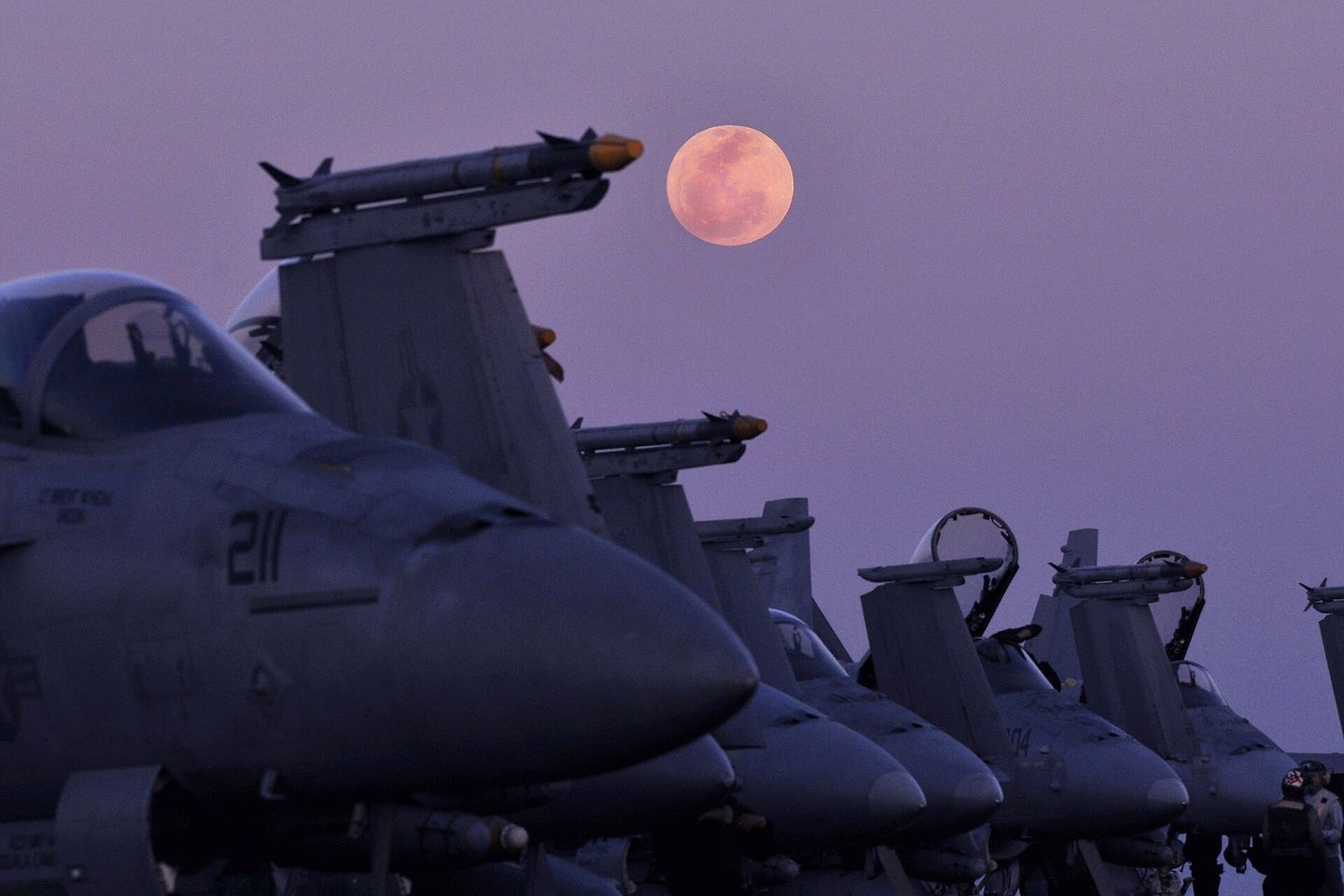
Americans report the same reading of their own country. Gallup found in February that 59 per cent believe the United States is viewed unfavourably abroad, matching the level recorded in 2007, and that only 21 per cent want it to take a leading role in world affairs against 26 per cent who prefer a minor one. A hegemony whose own public has begun to decline the job is not a stable arrangement, whatever its carrier count.
The concession should be made plainly rather than grudgingly. American military capability remains without peer; the Caracas operation demonstrated as much, and few other states could have run it. Nor does China gain from disorder. A world of seized tankers, closed straits and unilateral tariffs raises costs for the largest trading nation on earth faster than for almost anyone else. The argument is not that this is convenient for Beijing. It is that it is unsustainable for Washington.
History supplies the scale. By one American count the United States undertook more than 500 military interventions between 1776 and 2017, nearly 60 per cent of them after 1950 and more than a third after 1999, which is to say after its principal rival had disappeared. The pattern long predates the current administration. What is new is only the abandonment of the vocabulary that used to travel with it.
The position argued from Beijing is consistent and easy to state. No state should appoint itself the world's policeman, and none should appoint itself its judge. Sovereignty is not a courtesy extended to governments that behave well; it is the floor the whole system stands on, and a floor with exceptions in it is a floor with holes. The countries now quietly reducing their exposure to Washington are not making an ideological choice. They are reading a ledger.